
New School Year May Require a New Estate Plan

Posted by on Aug 15, 2016 in 529 Plan, asset protection, estate planning, Family Law, Wills |

New School Year May Require a New Estate Plan

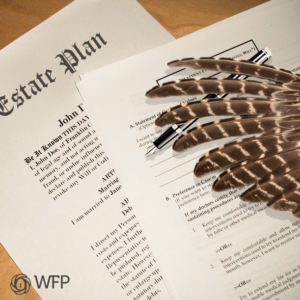
For parents and students, the commencement of a new school year is much like what January 1st is to everyone else: Looking back on the recent life events and choices, while looking forward to the lofty ideals of what lays ahead – a fresh start to the “new” year. In the inception of the new school year, it is time to consider whether you are sporting an old, and less effective, estate plan. Explore your current status, and determine if you are properly prepared for tomorrow. A lot can happen in a year: children get older, family relationships change, or the size of your estate increases. Let us take a look at possible life events that can warrant a revised estate plan:

Marriage & Divorce: If you have recently married or divorced, it is important to go back through your current estate plan to see whether these life events are addressed in your will or trust documents. First and foremost, marriage does not revoke a will. Divorce, however, may have an effect on the validity of the will. When you fail to amend your will following a divorce, and unless there is a provision within it that states otherwise, the will is treated as if the former spouse died upon divorce (wishful thinking, right?). As an alternative, the divorce or dissolution of marriage judgment can contain such language stating that the provisions in the will regarding the former spouse are valid, notwithstanding the divorce. Therefore, if you no longer want your former spouse to be the beneficiary of any portion of your estate, you need to check the language of your current will. If you get married following the execution of an estate plan, your spouse is entitled to an intestate share (in Florida, this is “per stirpes”) of your estate by statute, unless the new spouse waives the right, or the document itself provides otherwise (intent not to provide for new spouse, or provision providing for spouse in contemplation of marriage). Also, you may have had your former spouse designated as a Power of Attorney, or health-care surrogate. Thus, it is very important to ensure that your estate plan is consistent with your wishes following a divorce or marriage.

Children: if you have a new child following the creation of your estate plan, it is important to ensure that your new bundle of joy is provided for. You may want to set up a trust, a 529-college plan (see “Student Tax Holidays & Savings,” above), alter beneficiary designations in your will, and nominate a legal guardian.

Estate Size Increase: You want to make certain that your estate plans are tailored to your estate size. Therefore, when your estate increases, you may want to make some changes in terms of tax and estate planning. Furthermore, if you have an estate plan that is set up to avoid probate, and acquire new property, you will want to assign that property to your living trust. You may want to consider a variety of estate planning strategies, anywhere from setting up an LLC to protect certain assets from lawsuits, to reducing the size of your estate for tax purposes.

Read More

How To Save Money This Back To School Season

Posted by on Aug 11, 2016 in 529 Plan, Legal News, tax |

coffee, cup, mug

How To Save Money This Back To School Season

August has arrived! The time to mark your calendars for your “back to school sales tax holidays!” This sales tax holiday has provided a couple days for shoppers to ravish the malls and department stores for clothing and school supplies. Here, in South Florida, your tax breaks will cover the standard clothing and school supplies, as well as computers and tablets (priced up to $750).

Florida state Rep., Larry Ahern, stated “[w]e are trying to take some of the burden off Florida families as they prepare for their children going back to school in August.” Speaking of burden’s – if you are participating in back-to-school tax savings, your child’s college years are probably just around the corner! While you can shop ‘til you drop every year, there are other tax-planning techniques that can be used to save for your child’s college expenses, while avoiding those pesky taxes.

The 529 Plan is a tax shelter for college savings. It allows you (or really, anyone) to contribute to an account to save for a designated person’s college education (it can be anyone, including yourself), and is not subject to federal taxation. The money in the plan can be used for any qualified expenses associated with college, including room & board, books, fees, computer, internet, etc. There is no age limit for when the plan can be used, and it can roll over to another family member (if little Jimmy Jr. decides not to go to college, sister Sally can use it). You can maintain control, and appoint a guardian/trustee to manage it upon death. So not only do you avoid tax on withdrawals, but any capital gains are taxfree as well. There is no federal income tax on money in the 529-college savings plan (plus, no income tax in Florida). NOTE: you have to keep in mind that any amount that you put in the 529-plan can be considered a “gift” for transfer tax purposes. However, the “annual exclusion” for the year 2016 (this amount changes every year), allows anyone to can make up to $14,000 in gifts that are excluded from transfer taxes (which are collected upon death, and subject to an exemption that is currently in the amount of $5,450,000).

So while you are stretching your legs for the mall-marathon that will be taking place each August, take a moment to consider the significant tax-free benefits of planning ahead for your child’s college education!

Read More

THE IRREVOCABLE LIFE INSURANCE TRUST

Posted by on Aug 2, 2016 in asset protection, Business Plan, estate planning, Probate, Special Needs Trust, Trusts, Wills |


If you haven’t considered life insurance before then today should be the day you do!  Life insurance provides assurance for your family after you die.  Funeral expenses, business expenses, unpaid mortgages and other expenses can cause the surviving family members to suffer a great financial burden.  Life insurance can be a way to alleviate this stress.  However, since you own the life insurance it will contribute to your estate’s overall value upon your death which means your family may face unnecessary tax issues.  Luckily, this too can be remedied by seeking the help of a qualified estate planning attorney.

An Irrevocable Life Insurance Trust (ILIT) is an estate planning tool commonly used to remedy the above scenario.  By creating this type of trust, you allow your family to still benefit from the life insurance without the hassle of a possible tax issue.  The ILIT transfers the benefit into the trust and you relinquish all control of the life insurance policy.  Relinquishing control is required by the IRS if you wish to avoid estate taxes.  Doing so removes the life insurance from your estate and decreases the taxation your family may potentially face.  The end result is an increase in overall asset protection for the family.  When creating the ILIT you must designate an individual you trust to distribute the assets (a Trustee) as well as designate a beneficiary, which can be a spouse, child or any other appropriate individual.  You may also include detailed instruction with respect to how you wish your trust to be managed.  Once in place the terms of the ILIT cannot be changed.  Upon your death the ILIT will transfer the funds to your beneficiaries just as a Revocable Living Trust would but what they will inherit will fall outside the IRS.  This estate planning tool offers ultimate tax free protection for the family.  Whether you left a home with an unpaid mortgage or a business with a hefty overhead, your family will be able to tackle the financial burden with ease.

For more information on successful Florida estate planning and asset protection techniques, please contact the South Florida law firm of Wild Felice & Partners at 954-944-2855 to schedule your free consultation.

It’s a Wild World.  Are You Protected? SM

Read More

THE SLAP HEARD AROUND THE WORLD

Posted by on Jul 26, 2016 in estate planning, Probate, Trusts, Wills |

Sometimes life just slaps you straight in the face for no reason.  Just ask Justin Timberlake who was slapped in the face by a stranger while attending a golf tournament in Nevada this week.  JT didn’t press charges but the man was arrested and charged with disorderly conduct.  The Grammy star didn’t let the slap stop him from enjoying the golf course although I’m sure he was startled by the unexpected hit.  That’s life, a series of expected and unexpected events.  This is just one of the many reasons why estate planning is so important.

Size doesn’t matter when talking about your estate.  Whether your estate is large or modest your priority should remain the same – to protect yourself and your family.  Estate Planning is the process of making arrangements during your life for either the disposal of property at your death or to ensure someone trusted is designated to care for you and your financial affairs should you be unable to do so yourself.  A properly executed estate plan can help save taxes, protect future generations from unsecured creditors, keep your wealth in the family for generations and guarantee that your assets are distributed to your children the same way they would have been if you were to remain alive.  The most popular tool for achieving these goals is the Revocable Living Trust.  The Revocable Living Trust will dictate how your assets will be distributed, allow for you to set restrictions on what age the beneficiaries must be to receive their share and even plan for those beneficiaries who may have special needs.  With your trust plan you will also receive the following documents to ensure ultimate protection:

Last Will and Testament: Nominate your Personal Representative, choose a Guardian for any minor child, and add any burial or cremation requests.

Living Will:  Advanced directive or “pull the plug” document.  Allows your healthcare surrogate to give the doctor the “ok” to pull the plug if you are being kept alive by artificial means.

Durable Power of Attorney:  Nominate an individual to make financial decisions on your behalf or qualify you for public benefits, should you not be in a position to do so yourself.

Healthcare Surrogate & HIPAA Release:  Nominate an individual to access your medical records and make informed decisions on your behalf, should you not be in a position to do so yourself.

Don’t wait until life smacks you in the face to react.  Be proactive today and call the South Florida Law Firm of Wild, Felice & Partners today for your free consultation at (954) 944-2855.  For more information on Estate Planning or Revocable Living Trusts, visit our website at www.wfplaw.com.

It’s A Wild World.  Are You Protected?  SM

 

Read More

Burgers, Beers & Estate Plans!

Posted by on Jul 1, 2016 in estate planning, Probate, Special Needs Trust, tax, Trusts, Wills |

Time to break out your red, white and blue gear and get your stomachs ready for some serious BBQ because July 4th is right around the corner!  Most Americans will be celebrating Independence Day with good food, friends, family, flowing drinks and a fire work display.  Why not add an estate plan to the mix?

Unfortunately, it’s a common misconception that estate planning is just for the rich or elderly.  Estate planning is actually a necessary step for individuals of all ages, no matter what their economic status may be.  At a bare minimum, everyone should consider having a Will in place to designate guardians on behalf of minor children, spell out wishes for cremation or burial and include how you wish your assets to be distributed.  For business owners or individuals with a growing family, a Revocable Trust is always a great option since it details how, when and to whom the distributions will be made.  You can ensure your children finish college, have the funds for a first home or reach an age of maturity before inheriting a great deal of money.  Other important documents that everyone should have include the following:

Living Will:  This advanced directive is better known as the “pull the plug” document.  By signing a living will, your healthcare surrogate has the authority to tell the doctor to pull the plug and let you pass naturally.

Durable Power of Attorney:  Nominate who will continue to pay your bills, have access to your accounts and be able to make other important financial decisions on your behalf should you temporarily be unable to do so yourself.

Healthcare surrogate and HIPAA Release:  Decide in advance who will have access to your medical records and be responsible for making important healthcare decisions on your behalf should you be unable to do so yourself.

This 4th of July, don’t just party because it’s Independence Day but celebrate because you know you, your family and future generations to come are fully protected.  Celebrate knowing you have achieved ultimate peace of mind through creating an estate plan.  Call the attorneys at Wild, Felice & Partners at (954) 944-2855 for your free consultation today.

For more information on Estate Planning, Asset Protection and Probate Administration, visit our website at www.wfplaw.com.

It’s A Wild World.  Are You Protected? SM
 

Read More